
The financial services industry in India has seen tremendous growth over the past decade, driven by increasing retail participation, digital transformation, and a rising awareness of investment opportunities. With this growth comes a heightened demand for qualified professionals who can provide credible research and investment advice. One of the most important certifications for such professionals is the NISM Research Analyst Certification (Series XV). However, clearing this examination is not just about reading textbooks or memorizing concepts—it requires structured preparation, analytical thinking, and exam readiness. This is where NISM Research Analyst mock test examinations become indispensable.
Mock tests are not merely practice questions; they are a strategic tool that bridges the gap between preparation and performance. They simulate real exam conditions, sharpen your decision-making skills, and help you build the confidence needed to succeed.
This in-depth blog will cover everything you need to know about NISM Research Analyst mock test examinations—from their importance and structure to preparation strategies, expert tips, and a comprehensive FAQ section.
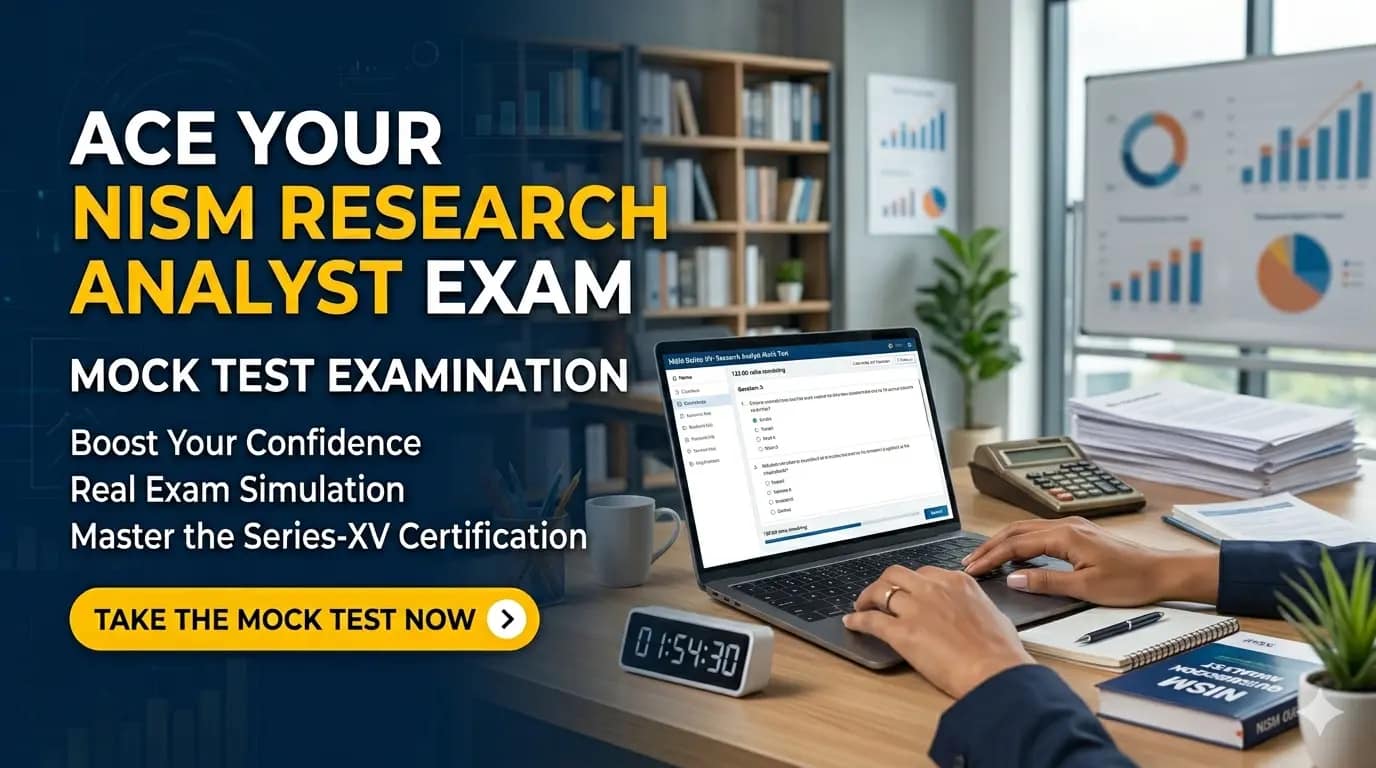
Understanding the NISM Research Analyst Certification
What is NISM?
The National Institute of Securities Markets (NISM) is an institution established by SEBI (Securities and Exchange Board of India) to enhance the quality of education and training in the securities markets.
Why is the Research Analyst Certification Important?
The certification is mandatory for individuals who wish to:
- Work as research analysts
- Provide stock recommendations
- Publish investment research reports
It ensures that professionals adhere to ethical standards and possess the required analytical skills.
Overview of the NISM Research Analyst Mock Test Examination
Before diving into mock tests, it’s essential to understand the actual exam.
- Exam Name: NISM Series XV – Research Analyst Certification
- Duration: 120 minutes
- Questions: 100 MCQs
- Passing Marks: 60%
- Negative Marking: 25% penalty for incorrect answers
- Mode: Online (computer-based test)
What is a Mock Test Examination?
A mock test examination is a simulated version of the actual NISM exam. It replicates:
- Exam pattern
- Difficulty level
- Time constraints
- Scoring system
Mock tests are designed to give you a real-time experience of the exam before you actually take it.
Start the test now and check your preparation level!
📊 NISM Series XV – Research Analyst Mock Test Examination
Prepare yourself for the NISM Research Analyst Certification Exam with this practice mock test designed as per the latest exam pattern.
Start the test now and check your preparation level!

Why Mock Tests Are Critical for Success
1. Realistic Exam Experience
Mock tests prepare you for:
- Time-bound pressure
- Question navigation
- Online exam interface
2. Performance Evaluation
They help you assess:
- Your current level of preparation
- Strong and weak areas
- Readiness for the actual exam
3. Time Management Mastery
Managing 100 questions in 120 minutes requires strategy. Mock tests teach you how to:
- Allocate time effectively
- Skip difficult questions
- Return to them later
4. Accuracy Improvement
Due to negative marking, accuracy is crucial. Mock tests train you to:
- Avoid blind guessing
- Use elimination techniques
5. Confidence Building
Repeated exposure reduces anxiety and boosts confidence.
Key Features of a Good Mock Test
Not all mock tests are equally effective. A high-quality mock test should include:
1. Updated Syllabus Coverage
Ensure alignment with the latest NISM curriculum.
2. Balanced Difficulty Level
A mix of easy, moderate, and difficult questions.
3. Detailed Solutions
Explanations for every question, including incorrect options.
4. Performance Analytics
- Topic-wise scores
- Accuracy rate
- Time spent per question
5. Exam-Like Interface
A platform that mimics the actual NISM exam environment.
Types of NISM Research Analyst Mock Tests
1. Topic-Wise Tests
- Focus on individual subjects
- Ideal for beginners
2. Sectional Tests
- Cover multiple related topics
- Moderate difficulty
3. Full-Length Mock Tests
- Complete exam simulation
- Best for final preparation
4. Adaptive Mock Tests
- Adjust difficulty based on your performance
Syllabus Areas Covered in Mock Tests
1. Securities Market Basics
- Market structure
- Financial instruments
- Trading systems
2. Fundamental Analysis
- Financial statements
- Ratio analysis
- Valuation techniques
3. Technical Analysis
- Chart patterns
- Indicators (RSI, MACD)
- Trend analysis
4. Economics
- GDP, inflation, interest rates
- Economic cycles
5. Corporate Governance
- Ethics
- Compliance standards
6. SEBI Regulations
- Research analyst guidelines
- Legal framework
How to Use Mock Tests Effectively
Step 1: Build Conceptual Foundation
Before attempting mocks:
- Complete the syllabus
- Understand key concepts
Step 2: Start with Topic-Wise Tests
- Focus on one subject at a time
- Strengthen weak areas
Step 3: Attempt Full-Length Tests
- Simulate real exam conditions
- Follow strict timing
Step 4: Analyze Performance
After each test:
- Review mistakes
- Identify weak topics
- Understand correct solutions
Step 5: Revise and Retake
- Revise difficult concepts
- Retake similar tests
Common Mistakes to Avoid
1. Skipping Analysis
Taking tests without reviewing results is ineffective.
2. Over-Reliance on Guessing
Negative marking can reduce your score significantly.
3. Ignoring Weak Areas
Focus more on improving weaknesses.
4. Inconsistent Practice
Irregular practice leads to poor retention.
5. Not Simulating Real Conditions
Always practice under exam-like conditions.
Expert Tips to Excel in Mock Tests
1. Maintain a Mistake Journal
Document:
- Incorrect answers
- Conceptual errors
2. Focus on Accuracy First
Speed improves with practice.
3. Use Elimination Techniques
Narrow down options logically.
4. Practice Regularly
Consistency is key to improvement.
5. Track Progress
Monitor your scores over time.
Ideal Mock Test Preparation Plan
Week 1–2
- Complete syllabus
- Attempt topic-wise tests
Week 3–4
- Take 3–5 full-length mocks
- Analyze results
Week 5
- Increase frequency of mocks
- Focus on weak areas
Final Week
- Light practice
- Revision
- Avoid burnout
Psychological Benefits of Mock Tests
Mock tests train your mind to:
- Stay calm under pressure
- Improve concentration
- Build exam temperament
- Reduce anxiety
How Many Mock Tests Should You Take?
- Minimum: 10 full-length tests
- Recommended: 15–25 tests
Quality matters more than quantity.
Last-Minute Strategy
1. Revise Key Concepts
Focus on formulas and important topics.
2. Avoid New Topics
Stick to what you already know.
3. Take Light Mock Tests
Avoid overloading yourself.
4. Stay Relaxed
Mental clarity is crucial.
Benefits of Online Mock Test Platforms
- Instant results
- Detailed analytics
- Flexible scheduling
- Large question banks
Frequently Asked Questions (FAQ)
6. Do mock tests match the real exam?
High-quality mocks closely resemble the actual exam.
7. Should I guess answers?
Avoid random guessing due to negative marking.
8. When should I start mock tests?
After completing basic syllabus preparation.
9. Are free mock tests sufficient?
They are useful for beginners, but paid tests offer better quality.
10. How do I analyze mock tests?
Review incorrect answers and understand concepts.
11. What if my scores are low?
Identify weak areas, revise, and practice more.
12. Can mock tests reduce exam anxiety?
Yes, they build familiarity and confidence.
13. Should I take daily mock tests?
Only in the final stage of preparation.
14. Are topic-wise tests useful?
Yes, especially for beginners.
15. How important is time management?
Very important—mock tests help improve it.
16. What is negative marking?
A penalty for incorrect answers (25%).
17. How can I improve accuracy?
Practice and avoid guessing.
18. Should I revise between tests?
Yes, revision is essential.
19. What is the best mock test strategy?
Practice, analyze, revise, and repeat.
20. Can mock tests guarantee success?
They significantly improve your chances but require consistent effort.
What is a NISM Research Analyst mock test?
It is a practice exam designed to simulate the actual NISM certification test.
Are mock tests necessary?
Yes, they are crucial for improving performance and confidence.
How many mock tests should I take?
Ideally, 15–25 full-length tests.
Can I pass without mock tests?
Possible, but not recommended.
What is a good score in mock tests?
High-quality mocks closely resemble the actual exam.